
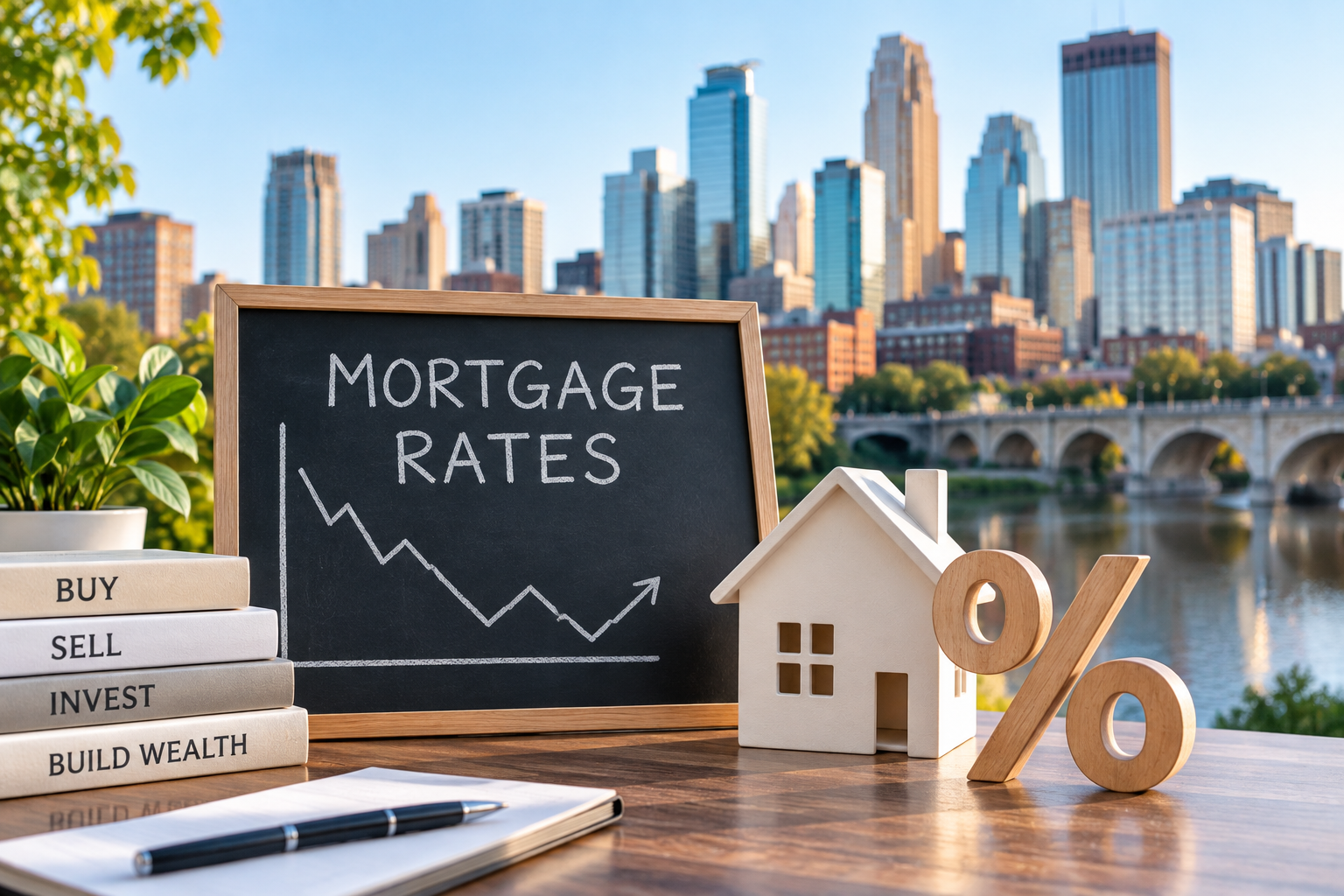
Mortgage Rates Near 7% Again: What Twin Cities Buyers and Sellers Should Know
Mortgage rates moved higher again in September, putting affordability back at the center of the real estate conversation.
As of September 17, 2026, Freddie Mac reported the average 30-year fixed mortgage rate at 6.95%, up from 6.76% the week before.
At nearly the same time, the Federal Reserve raised its benchmark federal funds rate by a quarter percentage point, bringing the target range to 3.75% to 4.00%.
For Twin Cities buyers and sellers, the important question is not simply whether rates are “high.”
It is how this rate environment changes monthly payments, buyer behavior, competition, pricing, and negotiating strategy.
Mortgage Rates Are Back Near 7%
The 30-year fixed mortgage rate has spent much of 2026 moving within a relatively narrow range, but September brought another move higher.
Freddie Mac's weekly average reached 6.95% on September 17, while the 15-year fixed rate averaged 6.26%.
Individual borrowers may receive different rates depending on credit score, down payment, loan type, property type, points, and lender pricing.
That means the national average is useful context, but your actual loan quote is what matters when deciding what you can comfortably afford.
What Did the Federal Reserve Do?
On September 16, the Federal Reserve raised the federal funds target range by 0.25 percentage points to 3.75% to 4.00%.
The Fed cited inflation that remains above its 2% goal, while also noting that economic activity and employment have remained relatively resilient.
This does not mean mortgage rates automatically increase by exactly 0.25%.
Mortgage rates are influenced more directly by longer-term bond yields and investor expectations about inflation, economic growth, and future Federal Reserve policy.
Why Didn't Mortgage Rates Jump Immediately After the Fed Meeting?
Because financial markets often move before the Fed actually acts.
Investors had already been expecting the September increase, so much of that information was already reflected in bond yields and mortgage pricing before the announcement.
This is why buyers should be careful about headlines suggesting that a Fed move will automatically cause mortgage rates to rise or fall the next day.
What Are Experts Expecting Next?
The outlook has become less optimistic than it was earlier in the year.
The Mortgage Bankers Association currently expects mortgage rates to remain near present levels over its forecast horizon and believes the Federal Reserve could make additional rate increases over the next year if inflation remains elevated.
That does not mean rates cannot fall.
If inflation improves or the economy slows, long-term bond yields could move lower and mortgage rates could follow.
But at this point, I would not build a home purchase around the assumption that mortgage rates will suddenly drop into the 5% range before year-end.
What Does a Rate Near 7% Mean for Monthly Payments?
Small rate movements matter more than they may appear.
For example, on a $300,000 mortgage, Freddie Mac estimates the principal-and-interest payment at approximately:
- 6.5%: about $1,896 per month
- 7.0%: about $1,996 per month
- 7.5%: about $2,098 per month
That is before property taxes, homeowners insurance, mortgage insurance, or HOA dues.
For a larger Twin Cities purchase, the difference becomes even more significant.
Should Buyers Wait for Rates to Fall?
This is one of the most common questions I hear.
If today's payment does not comfortably work, waiting may absolutely make sense.
But if the home and payment make sense today, trying to perfectly time mortgage rates can create a different risk.
If rates eventually fall, more buyers may re-enter the market at the same time.
That can mean:
- More showings
- More competing offers
- Less negotiating leverage
- More upward pressure on home prices
A slightly higher interest rate in a less competitive market can sometimes create opportunities that disappear when financing becomes cheaper.
Buy the House You Can Afford Today
I am comfortable talking about refinancing as a possible future opportunity.
I am not comfortable telling someone to stretch their budget because rates will definitely fall later.
There is no guarantee that a future refinance will make sense.
It depends on future mortgage rates, property value, credit, income, closing costs, and how long you expect to remain in the home.
The purchase should work based on today's numbers.
Higher Rates Make Seller Credits More Interesting
In a market where buyers are payment-sensitive, seller-paid closing costs or interest-rate buydowns can sometimes be more valuable than a similar reduction in purchase price.
For example, a buyer may prefer a credit that reduces financing costs rather than negotiating $10,000 off the purchase price.
The right answer depends on the loan structure, so this is something buyers should model with their lender before writing an offer.
Shopping Lenders Matters
This becomes increasingly important when rates are close to 7%.
Different lenders can quote different:
- Interest rates
- Discount points
- Origination fees
- Closing-cost credits
- Mortgage insurance
- Rate-lock periods
I generally recommend comparing the full loan structure rather than focusing only on the advertised interest rate.
What Does This Mean for Twin Cities Homebuyers?
Higher financing costs have made buyers more selective.
That can be frustrating, but it can also create opportunity.
Homes that have been on the market longer may offer more room for negotiation.
Sellers may be more receptive to:
- Closing-cost credits
- Rate buydowns
- Inspection requests
- Flexible closing dates
- Price adjustments
At the same time, well-priced homes in strong locations can still attract multiple buyers.
The Twin Cities market is increasingly property-specific rather than universally competitive or universally slow.
What Does This Mean for Sellers?
When rates rise, buyers begin thinking even more carefully about monthly payment.
That makes accurate pricing important.
A seller who pushes the price significantly above the market is asking a buyer to absorb both a higher purchase price and higher financing costs.
That can result in fewer showings and longer market time.
Homes that are well prepared, well marketed, and priced competitively are still selling.
The margin for pricing error is simply smaller.
Condos Can Be Even More Payment-Sensitive
Mortgage rates can have an especially noticeable impact on condominium buyers because the mortgage payment is only part of the monthly housing cost.
Buyers are also evaluating:
- HOA dues
- Property taxes
- Insurance
- Parking costs
- Special assessments
A condo with relatively high association dues may feel more expensive when mortgage rates rise, even if the purchase price itself appears attractive.
This is one reason the Minneapolis condo market should be analyzed separately from the single-family home market.
Explore our Minneapolis Condo Guide to compare individual buildings and neighborhoods.
What Should We Watch for the Rest of 2026?
The biggest factors affecting mortgage rates over the coming months will likely include:
- Inflation
- Federal Reserve policy
- 10-year Treasury yields
- Employment data
- Economic growth
- Investor expectations
Rates can move quickly when any of these expectations change.
The Bottom Line on Mortgage Rates
Mortgage rates are close to 7% again, and current forecasts suggest we should be prepared for rates to remain elevated rather than count on a dramatic decline before the end of the year.
That does not mean buyers should stop buying or sellers should stop selling.
It means the numbers need to make sense.
For buyers, that means understanding payment, comparing lenders, and negotiating intelligently.
For sellers, it means recognizing that buyers are more price-sensitive and positioning the property accordingly.
Thinking About Buying or Selling in the Twin Cities?
Interest rates are important, but they are only one part of a real estate decision.
Price, inventory, property condition, neighborhood, competition, financing options, and your own timeline all matter.
If you are considering buying or selling in Minneapolis, St. Paul, or the surrounding Twin Cities, Schedule a Consultation. We can talk through current market conditions and connect you with lenders who can help evaluate the financing side of the decision.
Mortgage rates change frequently and individual rates vary by borrower, lender, loan program, property type, points, and other factors. This article is intended for general real estate information and is not lending or financial advice.
Posted by Mike Seebinger on
Enjoy this blog post? Click here to subscribe for updates
Leave A Comment