

Ice Dams in Minnesota Homes: What They Are, How to Remove Them & How to Prevent Them
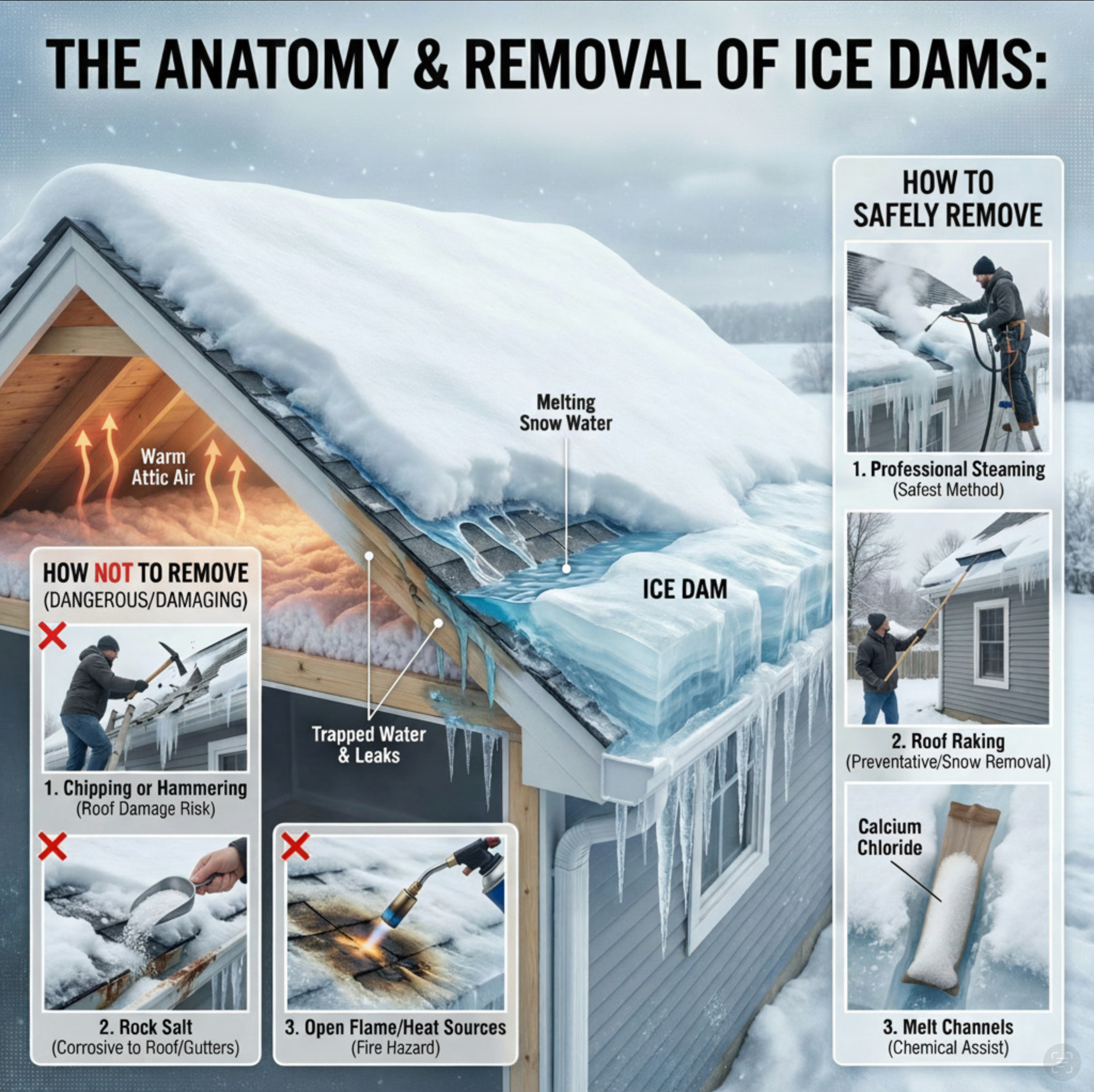
Ice dams are one of the most common—and costly—winter maintenance issues for Minnesota homeowners. From older homes in Southwest Minneapolis to newer construction in the western suburbs and even historic properties in St. Paul, ice dams can cause roof damage, interior leaks, and long-term moisture problems if not addressed correctly.
This guide explains what ice dams are, why they form, how to safely deal with them once they appear, and—most importantly—how to prevent them in the future.
What Is an Ice Dam?
An ice dam forms when snow on a roof melts, flows down toward the eaves, and then refreezes. Over time, this creates a thick ridge of ice that blocks proper drainage. As melting snow continues, water backs up behind the ice dam and can seep under shingles and into the home.
Ice dams are especially common in Minnesota due to:
- Extended periods of freezing temperatures
- Heavy snow accumulation
- Large temperature differences between attic space and outdoor air
Homes in neighborhoods like Linden Hills, East Harriet, Summit Hill, and older parts of St. Louis Park are particularly susceptible because of older insulation standards and complex rooflines. I'm putting this blog post together because it was top of mine being I've just personally dealt with an ice dam on my house where we noticed a water spot on the ceiling. We had a trusted ice, dam specialist, come out and take it down to eliminate further damage. Often times in Minnesota this comes later in the season, but we've had more precipitation than usual this year.
Why Ice Dams Are a Problem
Ice dams are more than an exterior issue. When water backs up behind the ice, it often finds its way into places it shouldn’t.
- Water stains on ceilings and walls
- Damaged insulation and attic moisture
- Warped wood, mold growth, and drywall repairs
- Damaged gutters and roof edges
In real estate transactions—especially during winter inspections—active or past ice dam damage can become a negotiation point or require repairs prior to closing.
How Ice Dams Form: The Minnesota Reality
Ice dams usually start with heat loss from the home. Warm air escaping into the attic heats the roof surface, melting snow from above. As the water reaches the colder roof edge (the overhang above exterior walls), it refreezes.
Common contributing factors include:
- Inadequate attic insulation
- Poor attic ventilation
- Air leaks around light fixtures, bath fans, or attic hatches
- Complex rooflines with valleys and dormers
This is why ice dams are frequently seen on older homes throughout Minneapolis and St. Paul, as well as lake-facing properties where wind-driven snow buildup is common.
How to Safely Remove Ice Dams
Once an ice dam forms, removal should focus on reducing risk—not creating additional damage. The goal is to relieve pressure and allow water to drain safely.
Recommended & Safer Options
- Professional steaming: This is the safest and most effective method. Steam removes ice without damaging shingles or gutters.
- Roof raking (from the ground): Removing snow 3–4 feet up from the roof edge can help prevent further buildup.
- Calcium chloride melt channels: Used carefully, these can create drainage paths through the ice.
What NOT to Do
- Chipping or hammering ice (high risk of roof damage)
- Using rock salt (corrosive to roofing and gutters)
- Applying open flames or heat sources (fire hazard)
Improper removal often causes more damage than the ice dam itself and can lead to expensive repairs.
Long-Term Solutions: How to Prevent Ice Dams
The most effective way to deal with ice dams is to prevent them from forming in the first place. This usually requires addressing heat loss and ventilation at the attic level.
Proven Prevention Strategies
- Improve attic insulation: Keeps heat inside the home where it belongs.
- Seal air leaks: Around attic hatches, recessed lights, and bathroom fans.
- Upgrade attic ventilation: Balanced intake and exhaust ventilation helps keep roof temperatures consistent.
- Install ice & water shield: Particularly important during roof replacement.
- Maintain gutters: Clear debris so meltwater can drain properly.
Homes near lakes like Lake Harriet, Bde Maka Ska, and Lake Minnetonka often benefit from extra attention due to wind exposure and drifting snow patterns.
Ice Dams & Real Estate: What Buyers and Sellers Should Know
Ice dams commonly come up during winter listings, inspections, and showings. Sellers should address active issues early, and buyers should understand whether damage is cosmetic or structural.
In some cases, remediation plans—rather than full repairs—are negotiated as part of a sale, especially when long-term solutions will be completed in warmer months.
When to Bring in a Professional
If you see active leaking, significant ice buildup, or recurring ice dams year after year, it’s time to consult a professional roofer or insulation specialist.
A proper evaluation can identify whether the issue is insulation, ventilation, air sealing, or roof design—and prevent repeat problems.
Next Steps for Minnesota Homeowners
Ice dams are common in Minnesota, but they’re not inevitable. With the right approach, homeowners can reduce damage risk today and make improvements that pay off for years to come.
If you’re dealing with ice dam issues while buying or selling—or planning improvements that protect your home’s long-term value— schedule a consultation to discuss practical solutions and how they affect your home and real estate plans.
Posted by Mike Seebinger onEnjoy this blog post? Click here to subscribe for updates
Leave A Comment